Entretien avec Alice Comte, responsable de coopération internationale pour la Friche la Belle de Mai.
Ça s'est passé à la Friche
Expérimentation sociale et écologique dans les friches
Par Sophie Bourlet
18 juin 2026
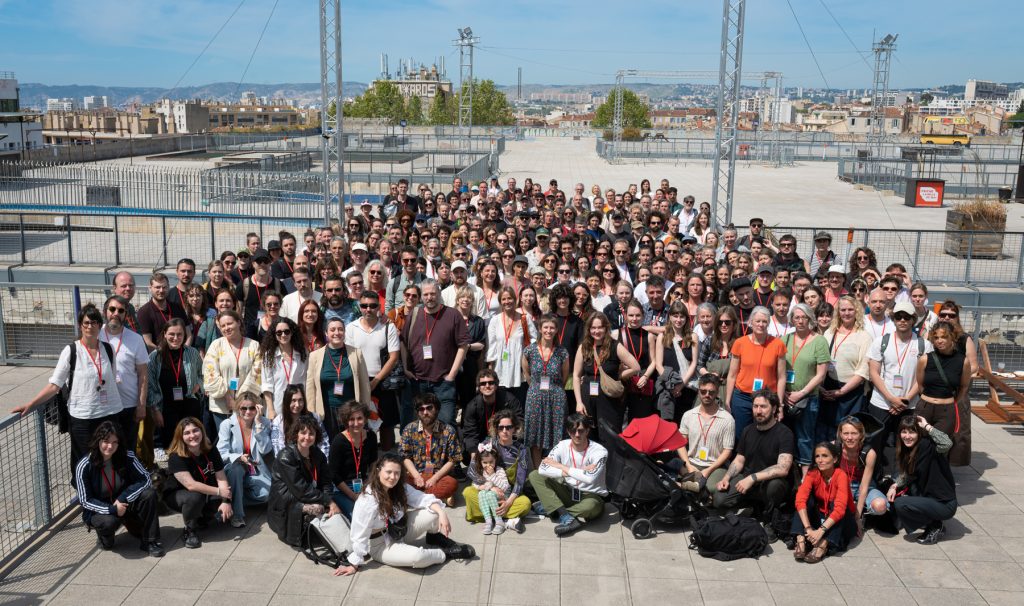
Que peuvent les espaces vacants urbains dans la régénération écologique et sociale ? C’est autour de cette question que huit sites pilotes du programme Future Divercities ont mené des expérimentations à travers toute l’Europe.
(ENGLISH BELOW)
Ce programme ambitieux, déployé sur quatre ans, prenait fin à la Friche Belle de Mai le ce jeudi 16 avril.
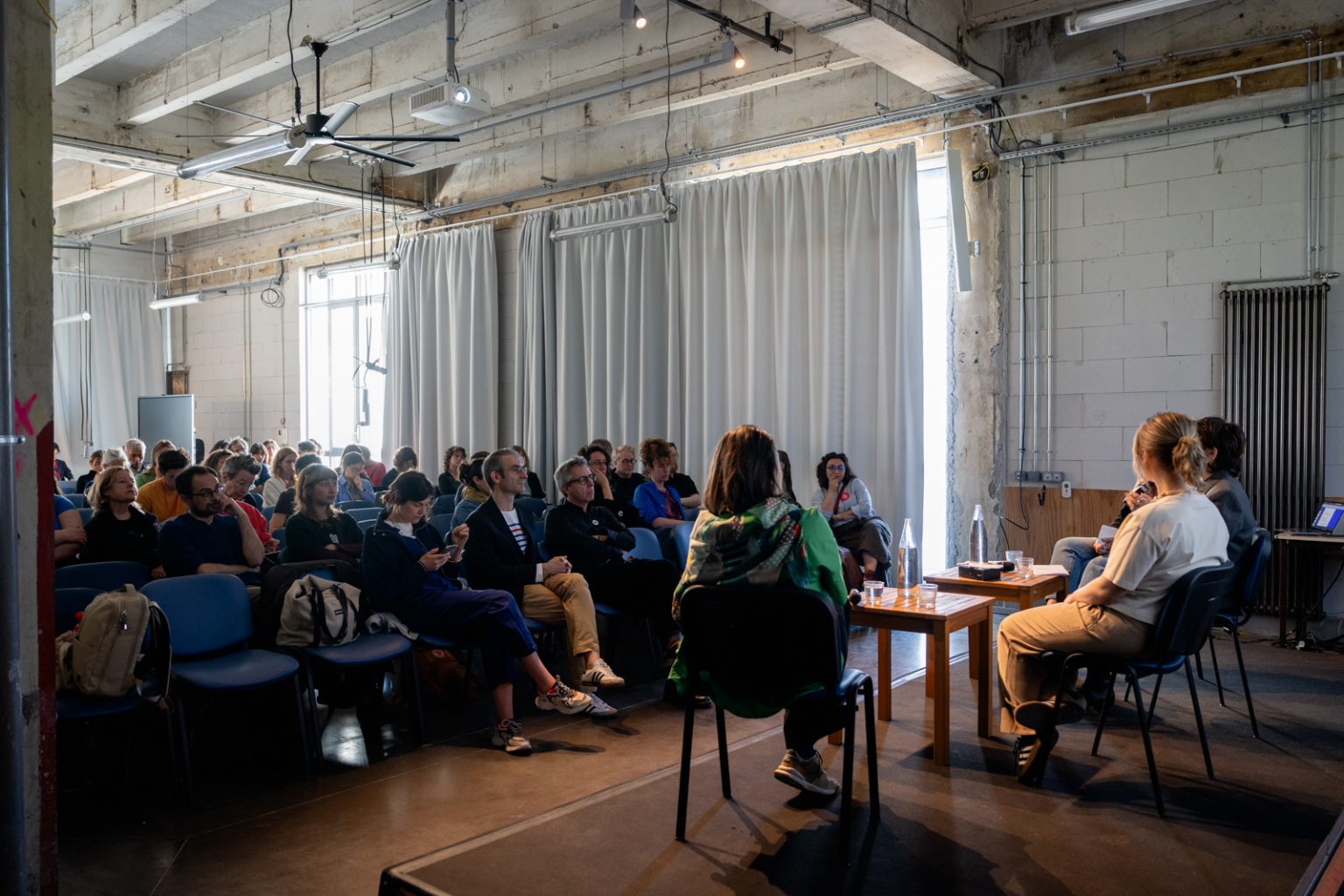
Que faire des espaces vacants ? Au travers d’expérimentations sur le temps long – quatre ans de projet – 8 participant·es au projet européen Future Divercities, ont pensé l’utilisation d’espaces vacants urbains, « ces endroits où la créativité est rendue possible », selon les mots d’Irene Favero représentante de la Commission Européenne, qui finançait le projet. Une exploration de Berlin, à Zagreb, en passant par Split, Kuopio, Marseille, Florence, Athènes, Timişoara ou encore Liepaja.
Des communs à repenser
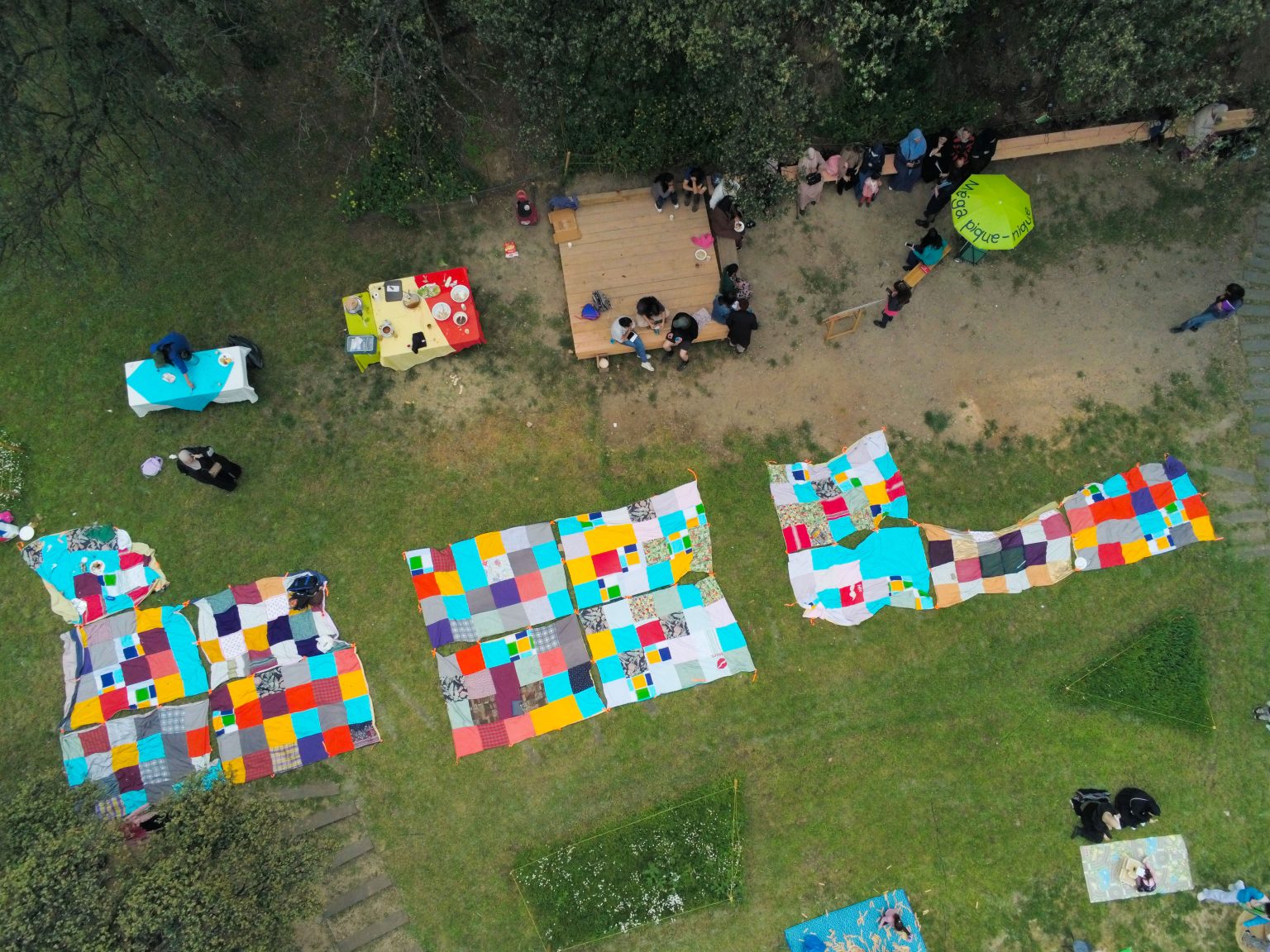
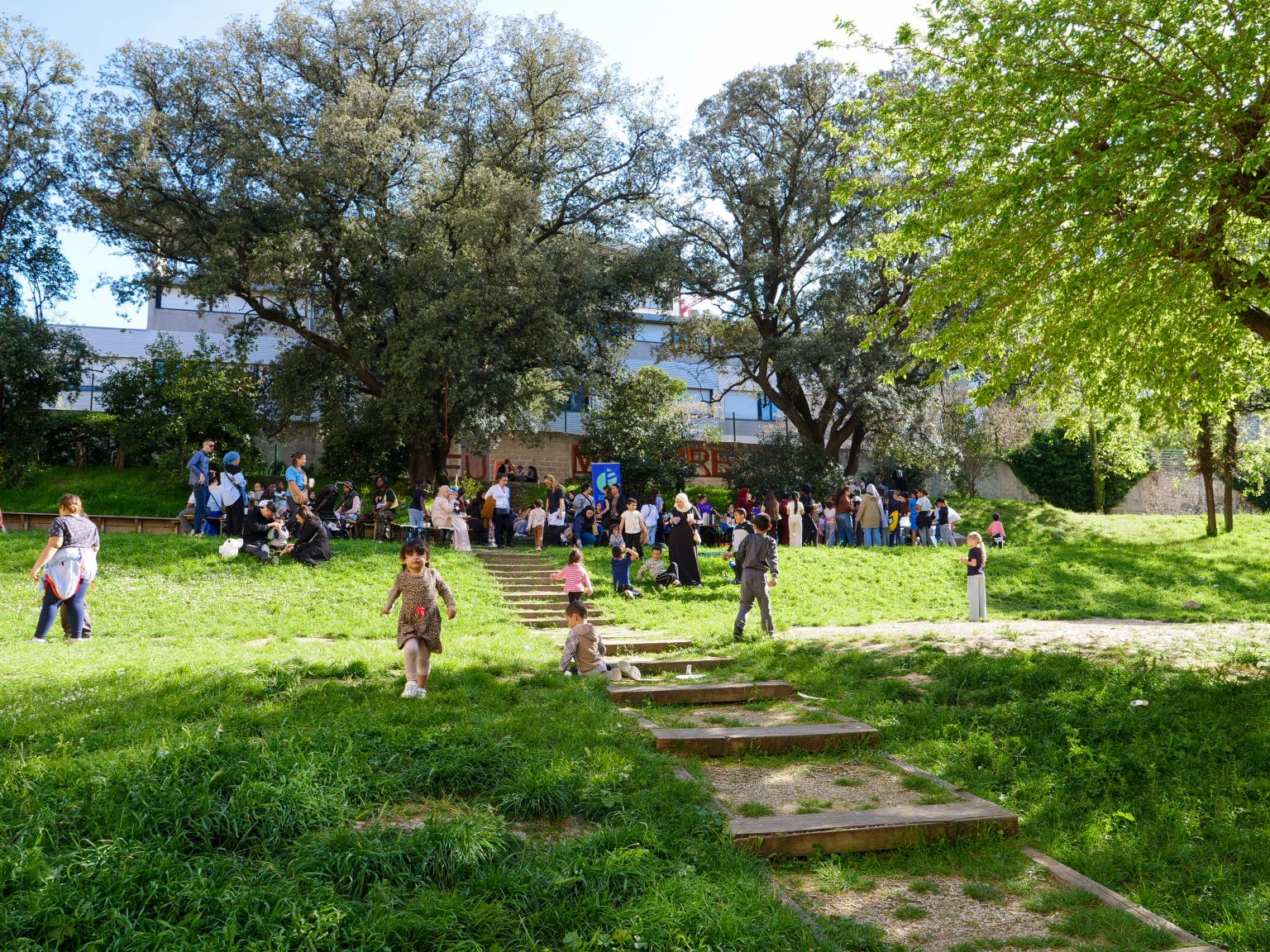
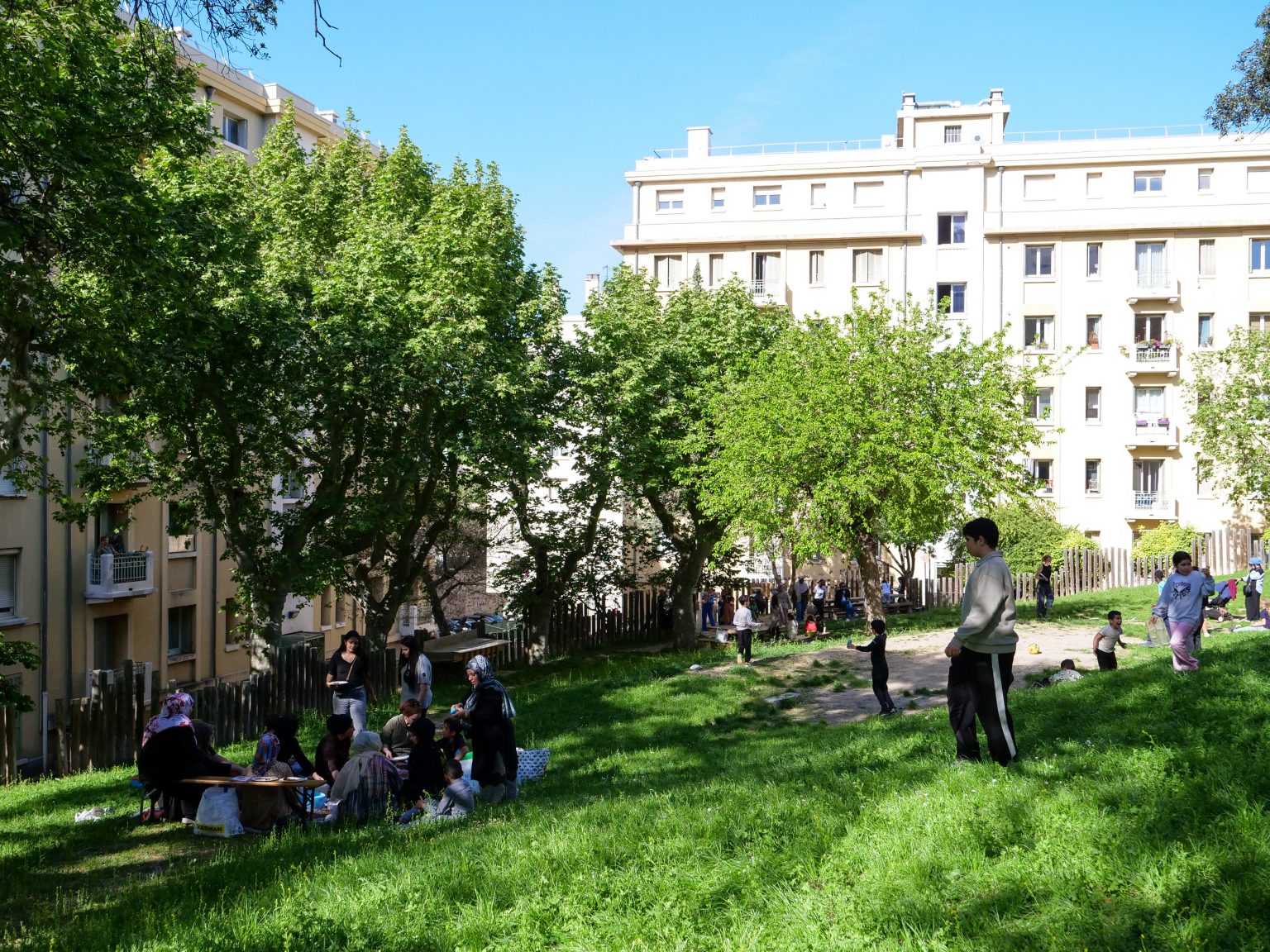
À Marseille, l’association Chroniques, le centre de création des arts et des cultures numériques de la Friche Belle de Mai et la société coopérative de la Friche ont porté dans ce cadre un projet explorant les relations entre humains, plantes, sols et sons dans le jardin de Crimée, non loin de l’ancienne manufacture de Tabacs.
Le parc résidentiel sous-utilisé a été investi par trois associations locales, Chroniques, Terrain Vague et Pépin production, pour l’organisation, entre autres, de fêtes estivales avec les habitant·es et voisin·es. L’idée, selon Ilaria Bondavalli, une des porteuses du projet, était de transformer « un endroit urbain en un endroit commun». Selon elle, un commun – un banc, un parc, un arbre – est situé dans l’espace public et n’est possédé par personne, ce qui rend son appropriation par les habitant·es intrinsèquement difficile.
Par l’intervention hebdomadaire d’artistes, de médiateur·ices et d’animateur·ices, et grâce à une enquête au long cours sur les usages du parc déjà préexistants, avec de l’écoute, du temps, et de la confiance, les voisin·es, notamment des mères et leurs enfants, ont petit à petit pris part à l’aménagement du lieu par la construction de tables, scène, toboggan, plantations d’herbes aromatiques, et à l’organisation d’une fête de printemps clôturant un an de rencontres. Aujourd’hui, ce collectif de femmes, accompagné par l’association Cultures du coeur, évoque l’idée de fonder une association afin de penser ensemble l’avenir de ce bien commun qu’est le Jardin de Crimée. Le projet a été largement documenté par une facilitation graphique et avec Radio Grenouille, structure résidente de la Friche via une série de podcasts.
Que peut l’art ?
À Karosta, en Lettonie, le projet pilote a transformé un ancien quartier militaire soviétique stigmatisé en laboratoire culturel et écologique. Avec des balades, les interventions d’artistes sur place, ou des expositions, les participant·es se sont réapproprié le territoire et ont changé de regard.
À Londa, petit village rural niché dans les montagnes autour de Florence, l’association LAMA a mis en œuvre un projet culturel avec les 1 500 habitant·es.
En proposant des activités artistiques temporaires, mais aussi et surtout permanentes, autour du lieu et de son patrimoine matériel et naturel, les artistes « créent un nouvel imaginaire et un nouvel héritage culturel et social », selon Martina Aiazzi Mancini, participante au projet.
Replacer le vivant au cœur
Mais l’art peut-il réellement changer la société ? Martina souhaite rester lucide quant à cette question de ce que peut l’art, au-delà de rendre un endroit plus beau. Forte de cette interrogation, l’université finlandaise de Savonia a étudié l’impact du projet Future Divercities, au travers le programme PIAP – Prospective Impact Assessment Process. Ils mettent en avant les résultats issus de ces expérimentations dans les friches. Future Divercities a ainsi permis « d’envisager l’avenir, de replacer le vivant au cœur de l’empathie, de partager des compétences créatives, et de développer des organismes porteurs de changement. »
–
Re-imagine culture-led regeneration of urban empty spaces in an ecological way.
What can urban empty spaces contribute to ecological and social regeneration? This is the question at the heart of experiments carried out across Europe by eight pilot sites in the Future DiverCities programme.
This ambitious four-year programme came to a close at la Friche la Belle de Mai Thursday, April 16th.
What to do with empty spaces? Through long-term experimentation – four years of work – eight participants in the European Future Divercities project explored how urban empty spaces could be used, « those places where creativity is made possible, » in the words of Irene Favero, representative of the European Commission, which funded the project. The exploration spanned Berlin, Zagreb, Split, Kuopio, Marseille, Florence, Athens, Timişoara, and Liepāja.
Rethinking the commons
In Marseille, the association Chroniques, the digital arts and culture creation centre at la Friche and the Friche’s cooperative society led a project exploring the relationships between humans, plants, soil, and sound in the Jardin de Crimée, not far from the former tobacco factory.
The underused residential park was taken over by three local associations, Chroniques, Terrain Vague, and Pépin Production, to organise, among other things, summer festivals with residents and neighbours. The idea, according to Ilaria Bondavalli, one of the project leads, was to turn « an urban space into a commons » — a practice the project calls commoning. According to her, a commons – a bench, a park, a tree – exists in public space and belongs to no one, which makes it inherently difficult for residents to make their own.
Through weekly visits from artists, mediators, and facilitators, and thanks to a long-running survey of the park’s pre-existing uses, carried out with listening, time, and trust, neighbours – particularly mothers and their children – gradually took part in shaping the space themselves: building tables, a stage, a slide, planting aromatic herbs, and organising a spring festival marking the close of a year of encounters. Today, this collective of women, supported by the association Cultures du Coeur, is discussing forming an association to plan the future of this commons, the Jardin de Crimée, together. The project was extensively documented through graphic facilitation and, with Radio Grenouille, a resident organisation at the Friche, through a series of podcasts.
What can art do?
In Karosta, Latvia, the pilot project transformed a stigmatised former Soviet military district into a cultural and ecological laboratory. Through walks, on-site artist interventions, and exhibitions, participants reclaimed the area and shifted how it was perceived.
In Londa, a small rural village nestled in the mountains around Florence, the association LAMA carried out a cultural project with the village’s 1,500 residents.
By offering temporary, but above all permanent, artistic activities centred on the place and its material and natural heritage, the artists « create a new imaginary and a new cultural and social legacy, » according to Martina Aiazzi Mancini, a project participant.
Create a new imaginary and a new cultural and social legacy
But can art really change society? Martina prefers to stay clear-eyed about this question of what art can actually achieve, beyond making a place more beautiful. With this in mind, Finland’s Savonia University of Applied Sciences assessed the impact of the Future Divercities project through the PIAP – Prospective Impact Assessment Process. They highlight the results stemming from these experiments in the friches: Future DiverCities made it possible « to imagine the future, to put the living world at the heart of empathy, to share creative skills, and to develop organisations that drive change. »
À lire dans le même dossier
Coopération internationale
« Mawjaat » : fédérer une communauté d’acteurs culturels en Méditerranée
Depuis un an, la Friche s’est attachée à constituer une communauté solidaire et visible, capable d’agir collectivement à l’échelle méditerranéenne : présentation.
Un hackathon pour améliorer le bien-être des femmes dans l’espace public
Trois jours, soixante participant·es, un objectif : proposer des solutions pour améliorer le bien-être des femmes dans l’espace public. Ce deuxième hackathon du programme européen CREAConnect était accueilli par la Friche Belle de Mai et l’incubateur de l’AMI. Un exemple de coopération locale et internationale au cœur du projet de la société coopérative.